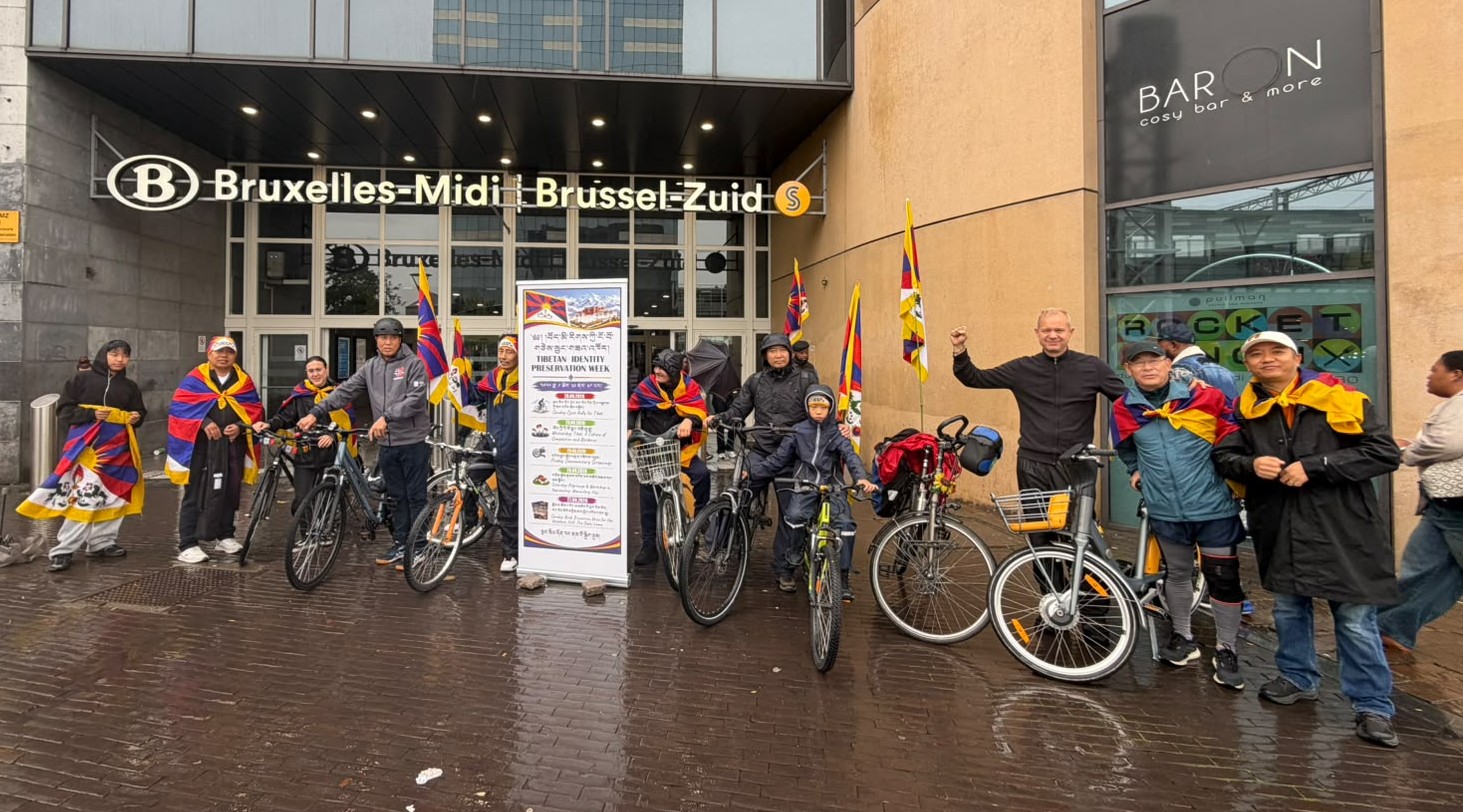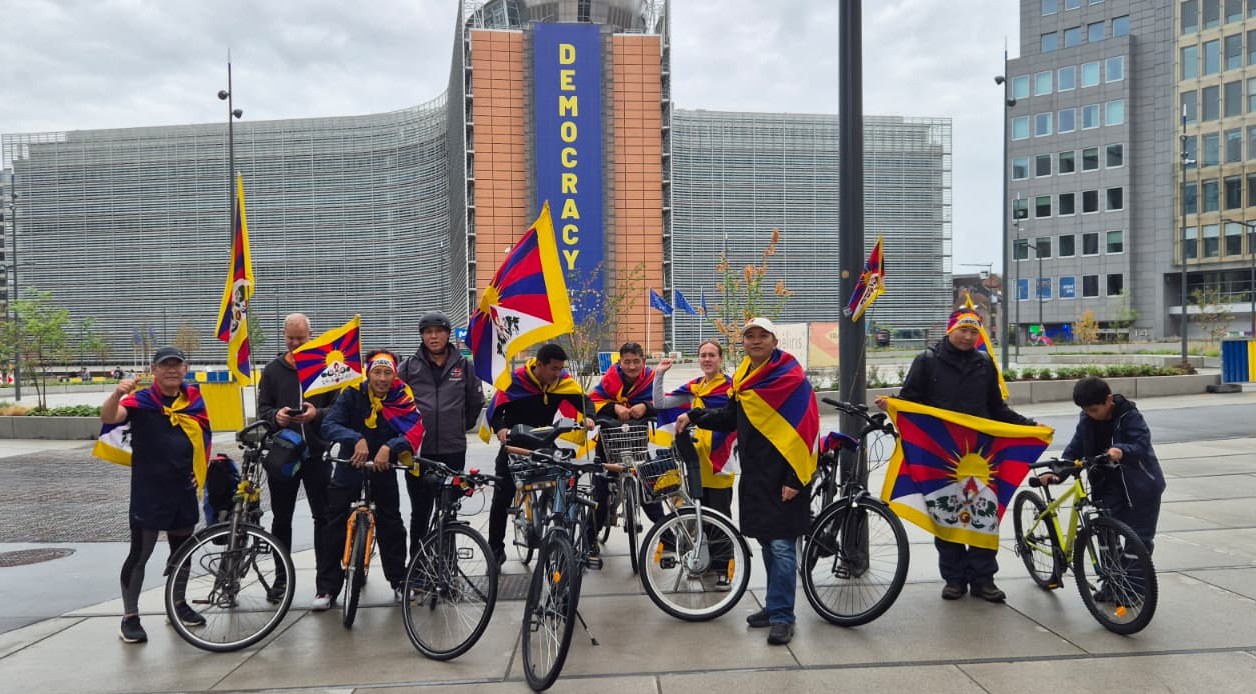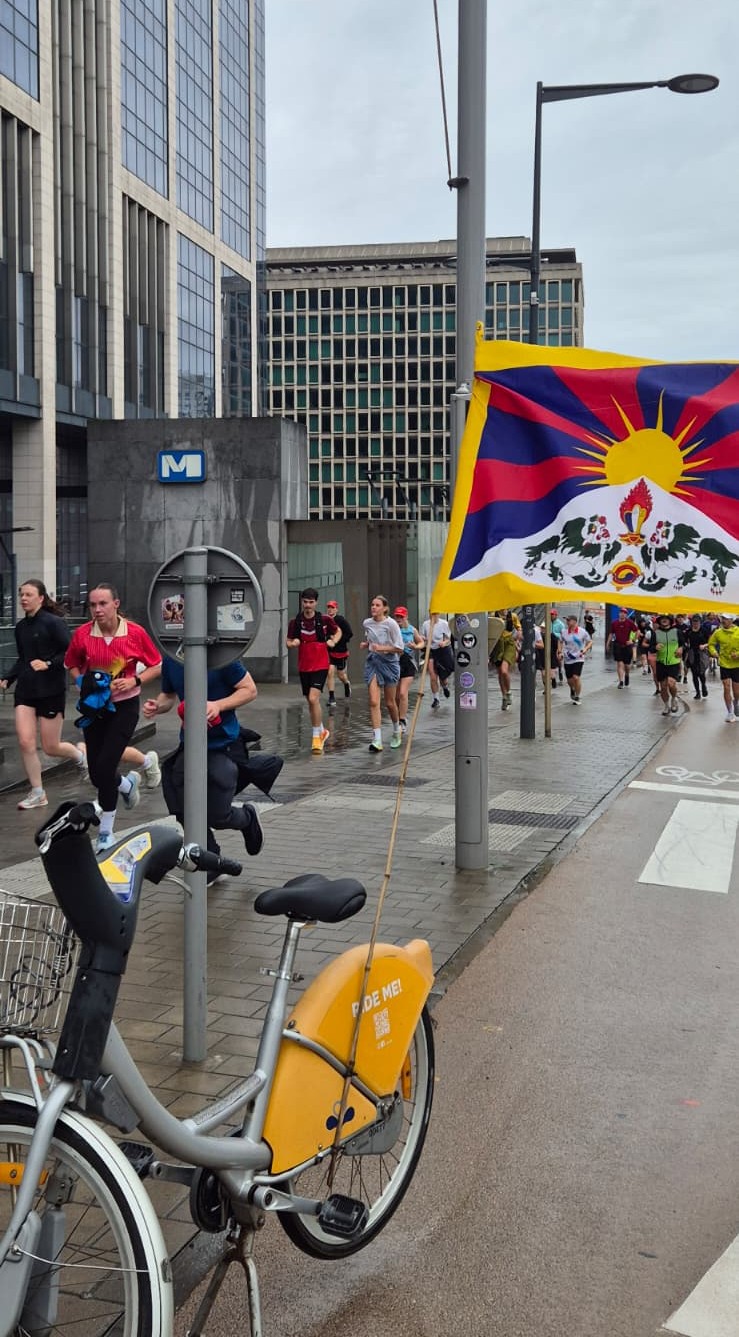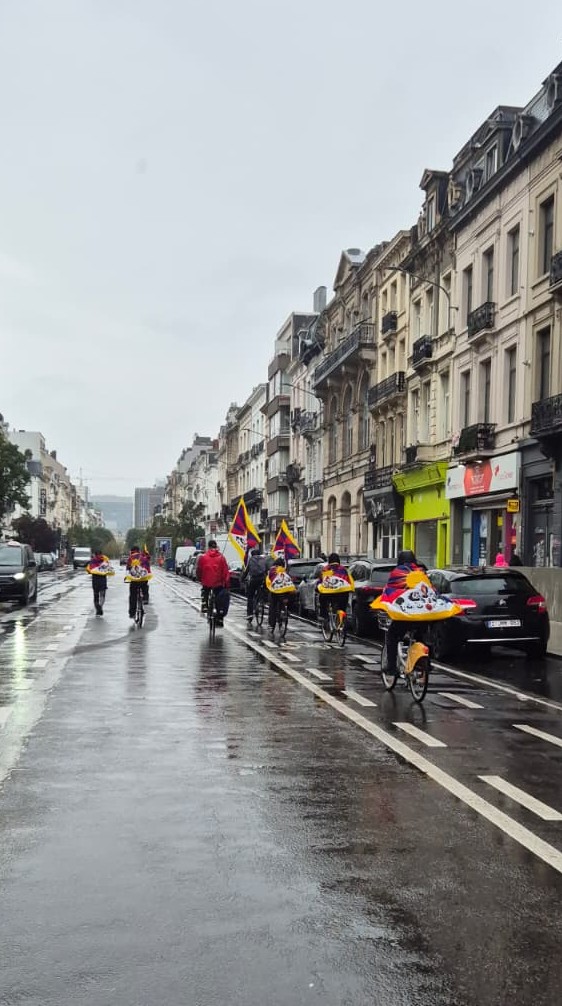
Brussels, 20 September 2026: Despite heavy rain throughout the morning, around 25 Tibetans, joined by supporters from the International Campaign for Tibet (ICT), took to the streets of Brussels by bicycle as part of a rally organised by the Office of Tibet on Car-Free Sunday. The cyclists used the city’s car-free streets to raise awareness of Tibet and share Tibetan culture and identity with the wider public.
The rally began at Brussels-Midi Station, one of the city’s busiest railway hubs, where thousands of commuters and visitors pass through each day. From the station, the group cycled together through the normally busy streets of Brussels, bringing their message for Tibet to some of the city’s most prominent public spaces.
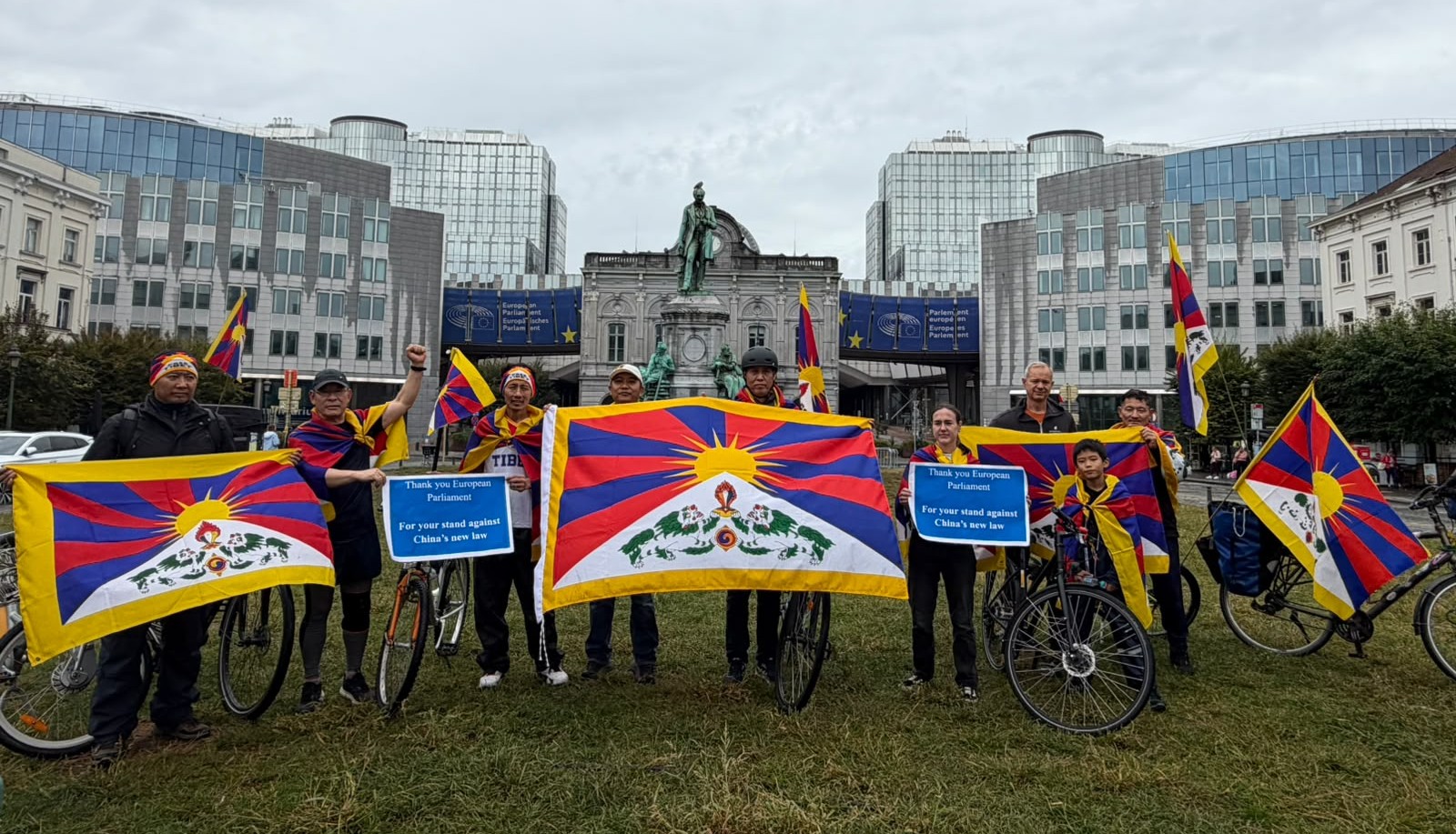
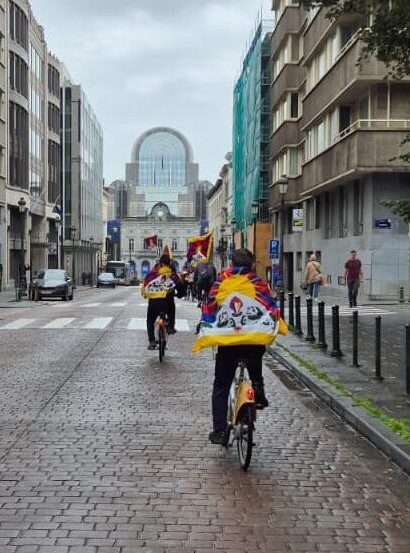
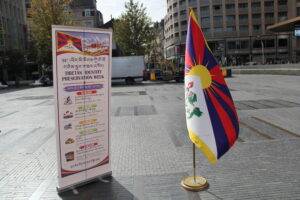
The Tibetan national flag was highly visible throughout the ride. Each cyclist displayed the flag on their back and at the front of their bicycle, creating a striking presence along the route. For those familiar with Tibet, the sight of the flags brought a sense of connection and joy, while for others, it sparked curiosity and provided an opportunity to learn more about Tibet and the significance of the Tibetan national flag.
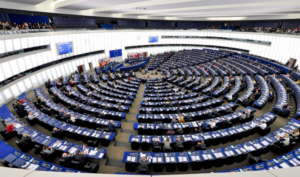
The cyclists then made their way towards the European Parliament, where they expressed appreciation for the institution’s support for Tibet. In April, the European Parliament passed, by a large majority, a resolution calling for the repeal of China’s new “Ethnic Unity Law”, which is designed to erase the very identity of the Tibetan people.
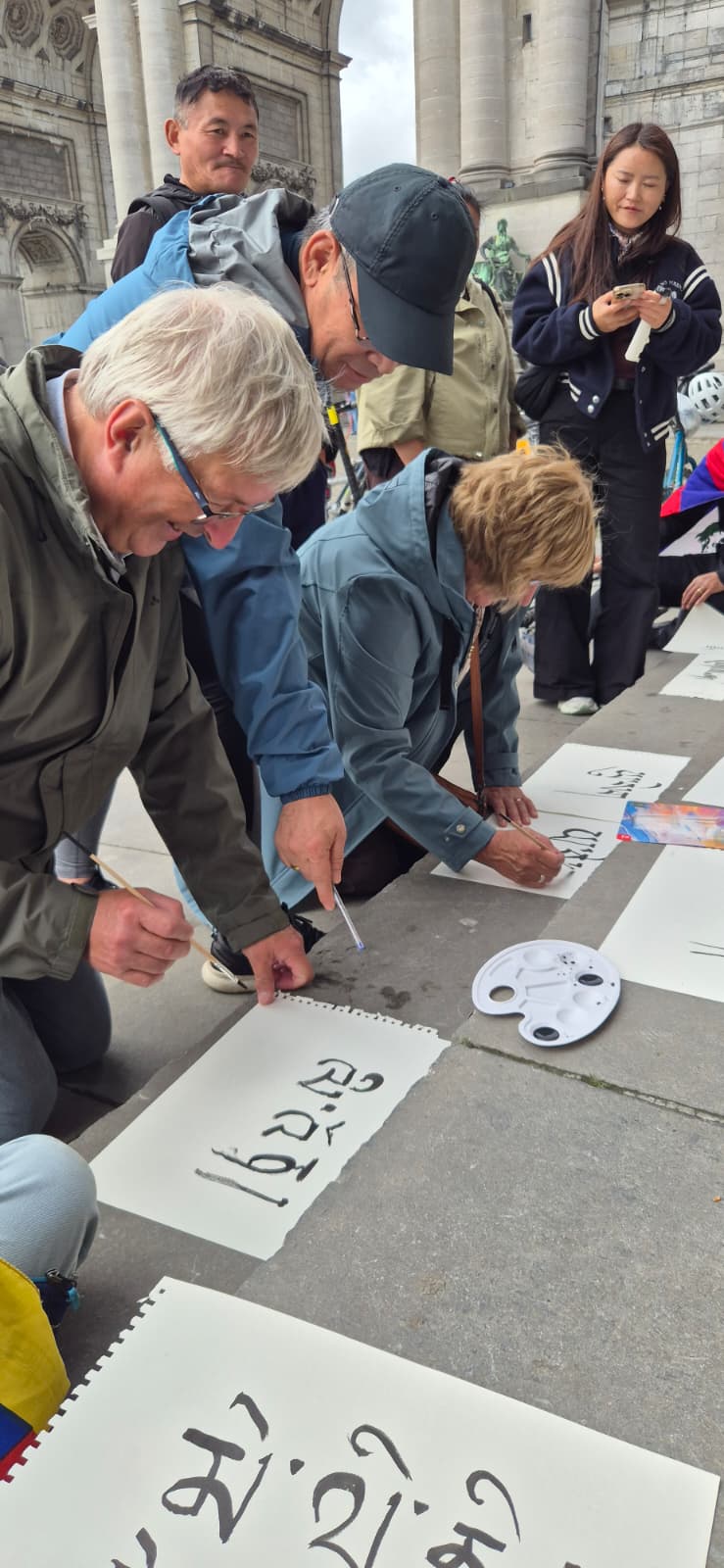
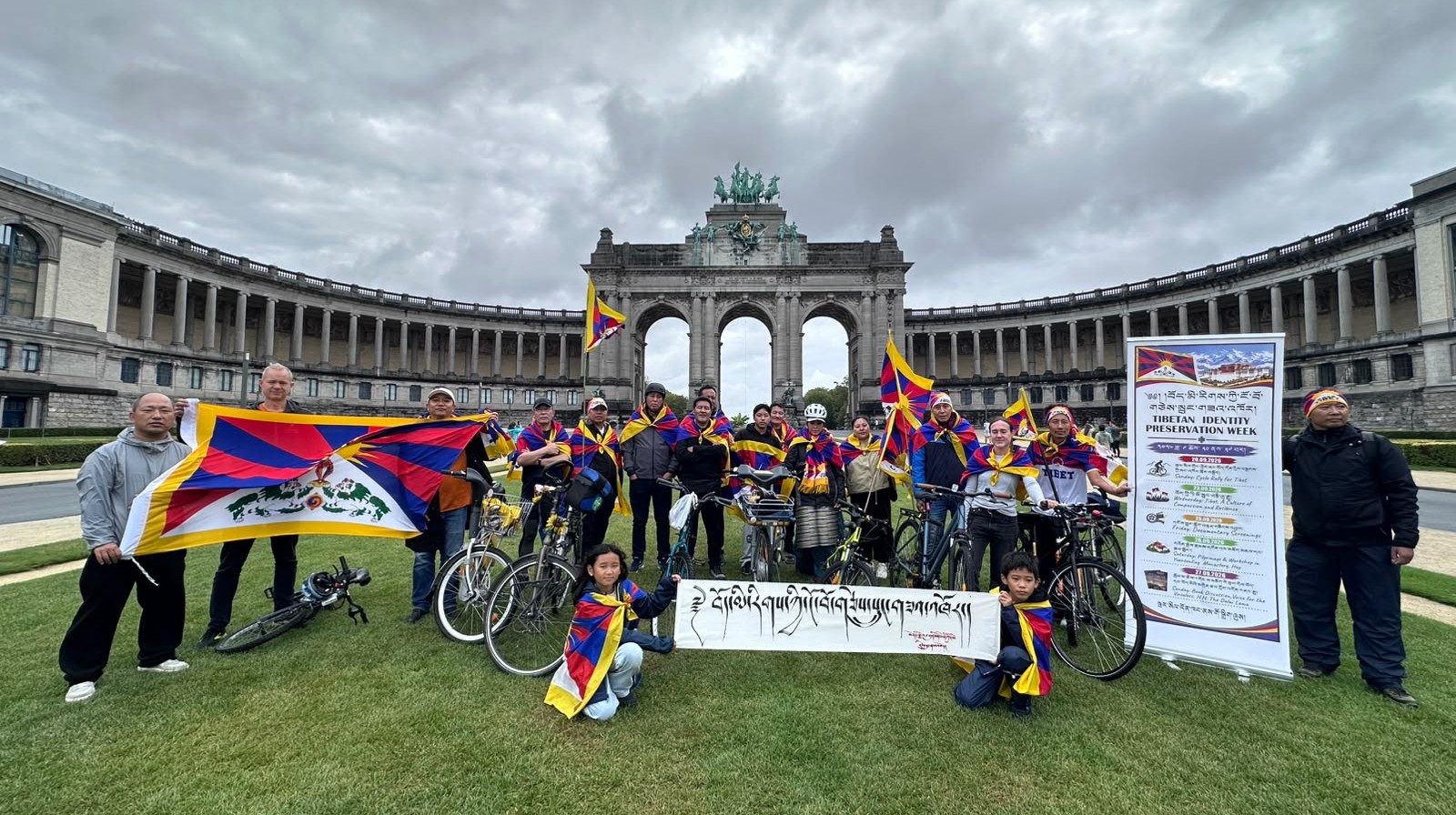
From the European Parliament, the group continued to one of the city’s famous landmarks, Cinquantenaire Park, where the advocacy took on a cultural dimension ahead of Tibetan Identity Preservation Week.
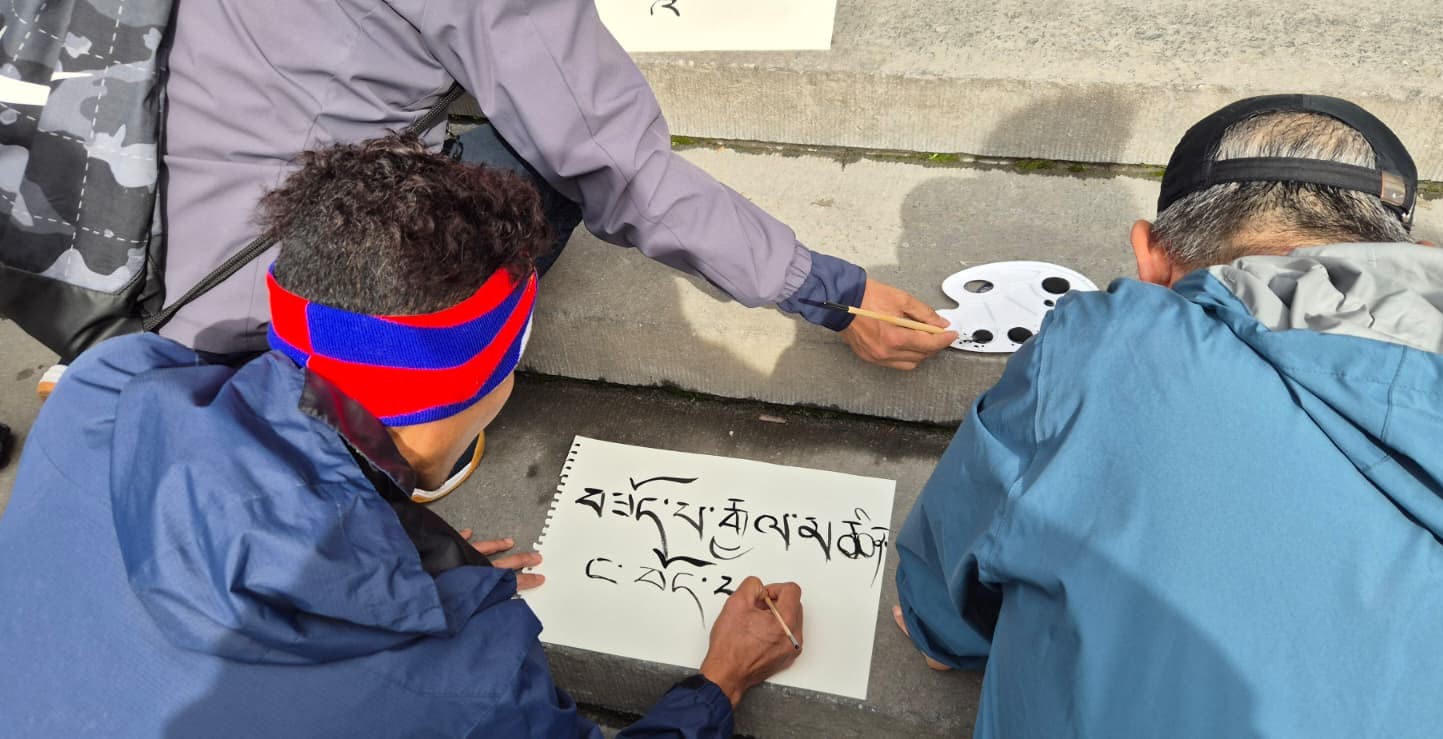
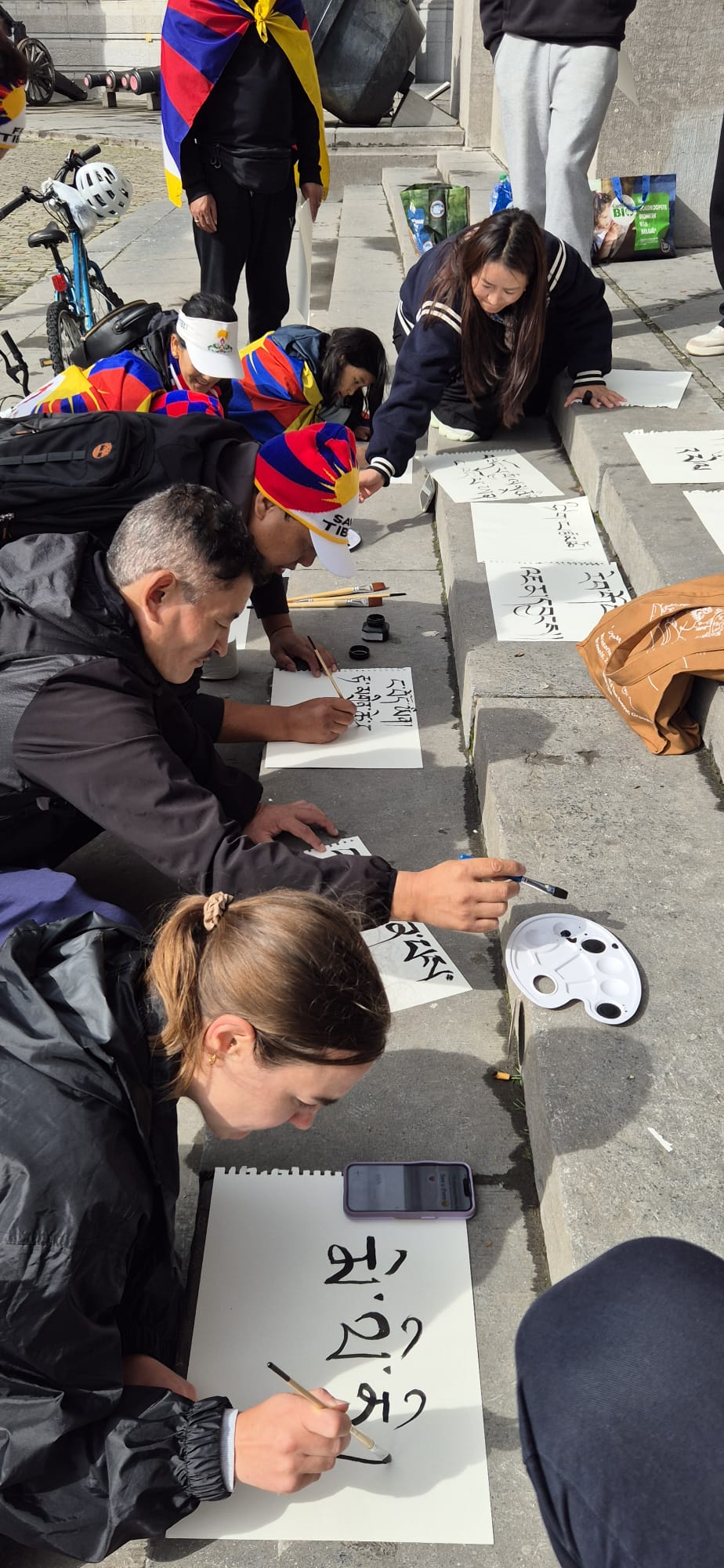
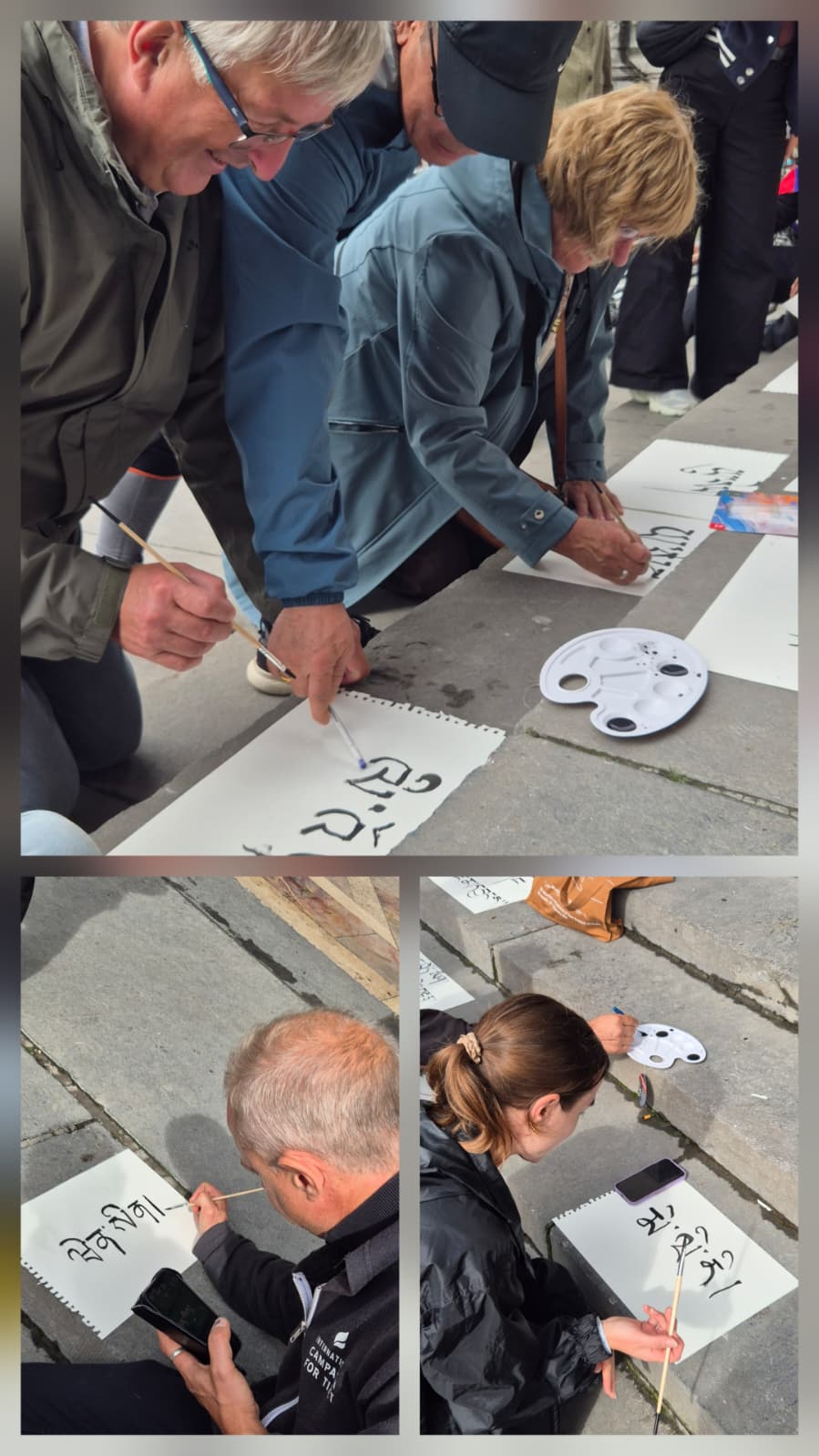
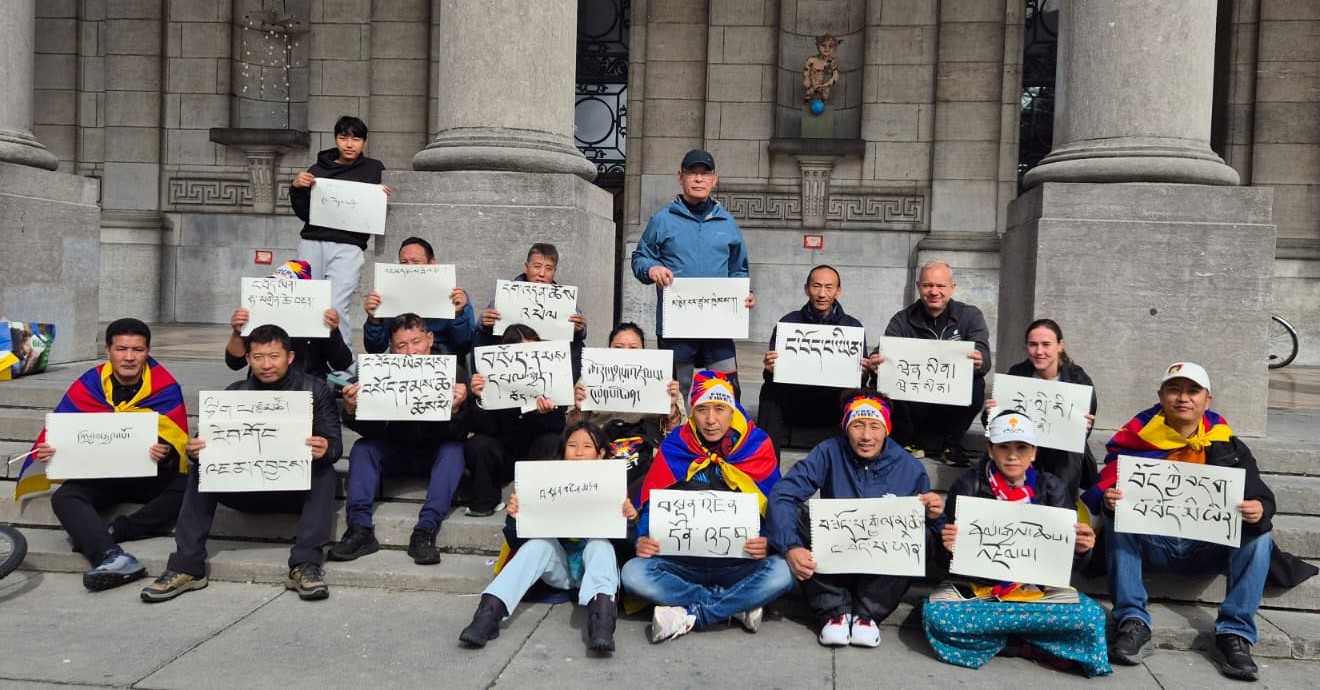
At the park, cyclists wrote their wishes and messages in the Tibetan language and invited members of the public to write their names in Tibetan script. The activity quickly attracted the attention of passers-by and international visitors, many of whom were curious to learn more about the Tibetan language.
Some visitors went a step further by taking part in the activity and writing their own names in Tibetan. The simple exercise created an opportunity for cultural exchange and introduced people from different backgrounds to the Tibetan script and its importance as an expression of Tibetan cultural identity.
The event also served as a reminder of the importance of preserving the Tibetan language, culture and identity. By combining cycling, public engagement and cultural activities, the participants brought their message beyond the Tibetan community and into the heart of Brussels.
Despite the difficult weather conditions, the cyclists completed their journey, travelling from Brussels-Midi through the city centre and past the European Parliament before concluding at Cinquantenaire Park covering some 9 kms.
For the participants, Brussels Car-Free Sunday was more than an opportunity to cycle through traffic-free streets. It became a platform to raise awareness of Tibet, promote the Tibetan language and culture, and share a message of cultural identity and solidarity with people from across the city.