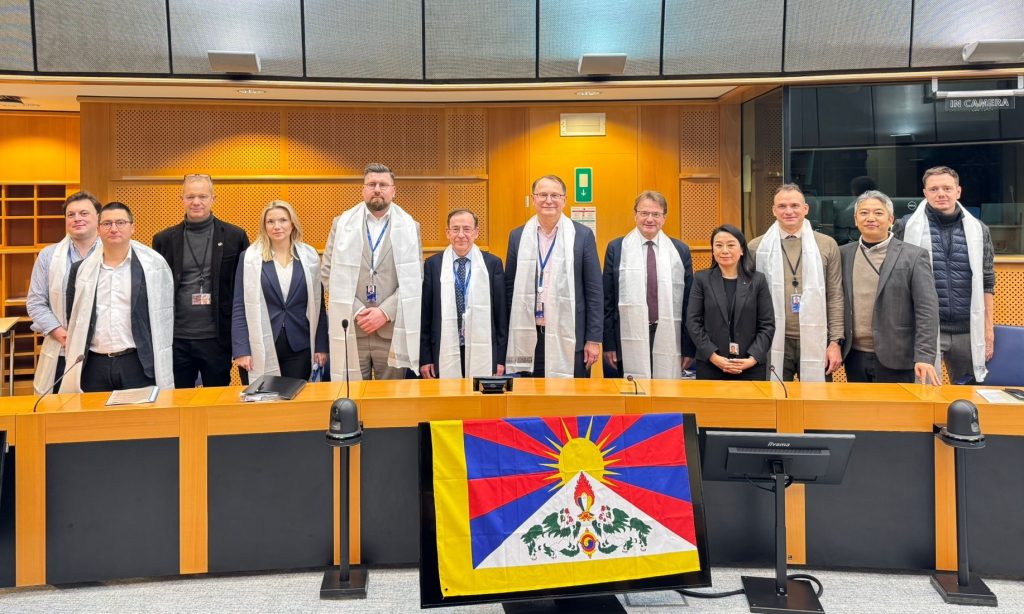
Brussels, 18 December: The Inter-Parliamentary Group for Tibet in the European Parliament has expressed serious concern over the reported mass arrest of around 80 Tibetans and communications blackout imposed following a peaceful protest against illegal gold mining in Kashi, Kham, in eastern Tibet.
The co-chairs strongly criticised the criminalisation of peaceful environmental protest, stating that it constitutes a serious violation of fundamental rights, including freedom of expression, peaceful assembly, and environmental protection.
The statement condemns the heavy-handed response by Chinese authorities and calls on the People’s Republic of China to immediately de-escalate the situation. It urges the PRC to release all individuals detained solely for peacefully exercising their rights and to refrain from use of mass arrests and coercive measures against non-violent protestors.
The Group further calls for transparent and independent investigations into the reported crackdown and stresses the importance of meaningful consultation with affected Tibetan communities. Respect for environmental and human rights standards, it notes, is essential to prevent further tensions and to ensure accountability for the actions of security forces and local officials.
Reaffirming the European Parliament’s long-standing concerns over the human rights situation in Tibet, the Inter-Parliamentary Group reiterated its solidarity with the Tibetan people and urged Chinese authorities to uphold their obligations under international human rights law and to protect Tibetans’ rights to safeguard their land, culture and way of life.
In response, Representative Rigzin Genkhang of the Office of Tibet Brussels welcomed the statement issued by the co-chairs on behalf of the Group, expressing deep gratitude for the continued support and solidarity shown by Members of the European Parliament. The Representative stressed that, in light of the escalating repression and environmental destruction in Tibet, such principled international engagement is urgently needed and must be followed by concrete actions to protect Tibetan communities, hold perpetrators accountable, and ensure that the voices of Tibetans defending their land and environment are heard and respected.