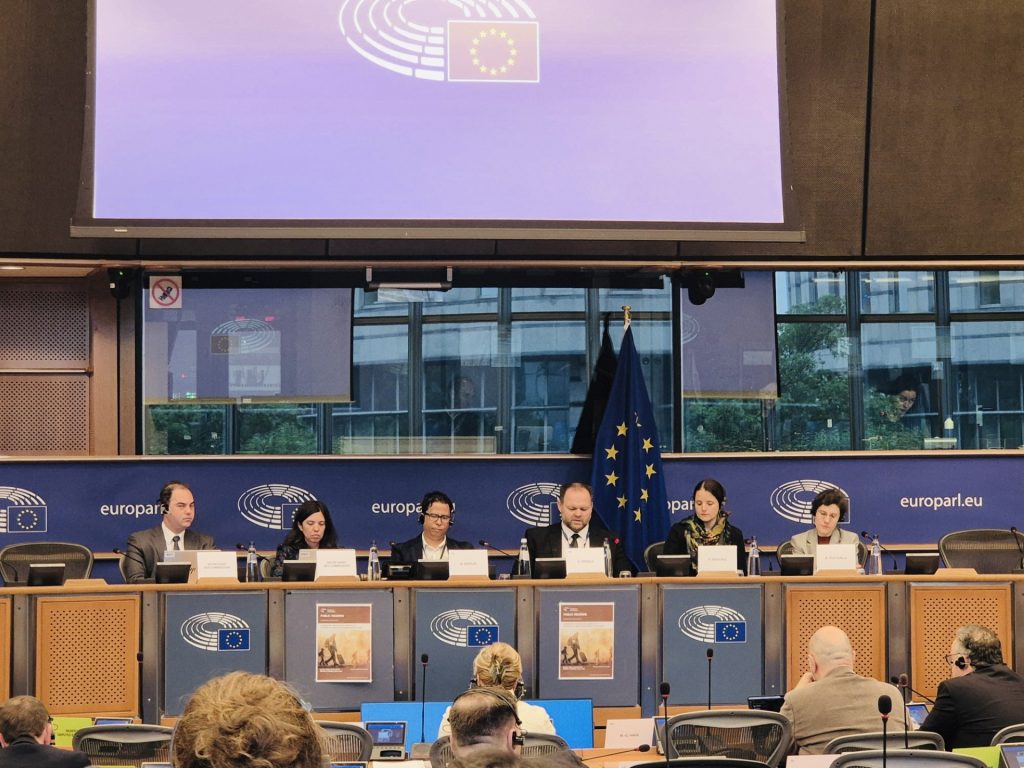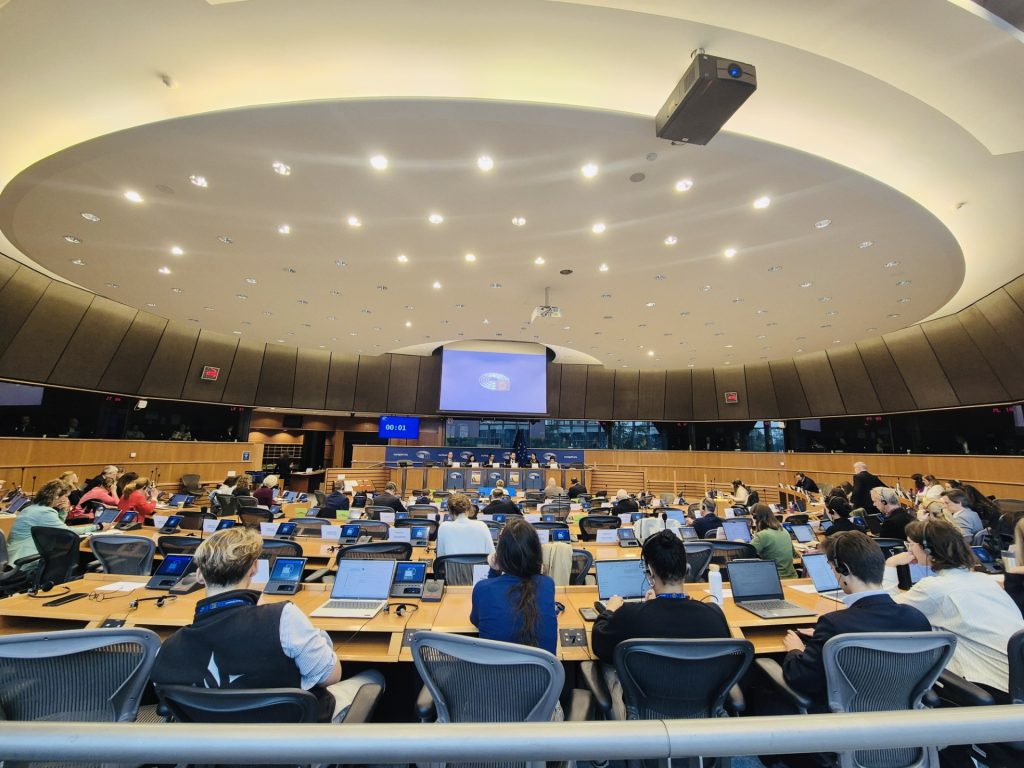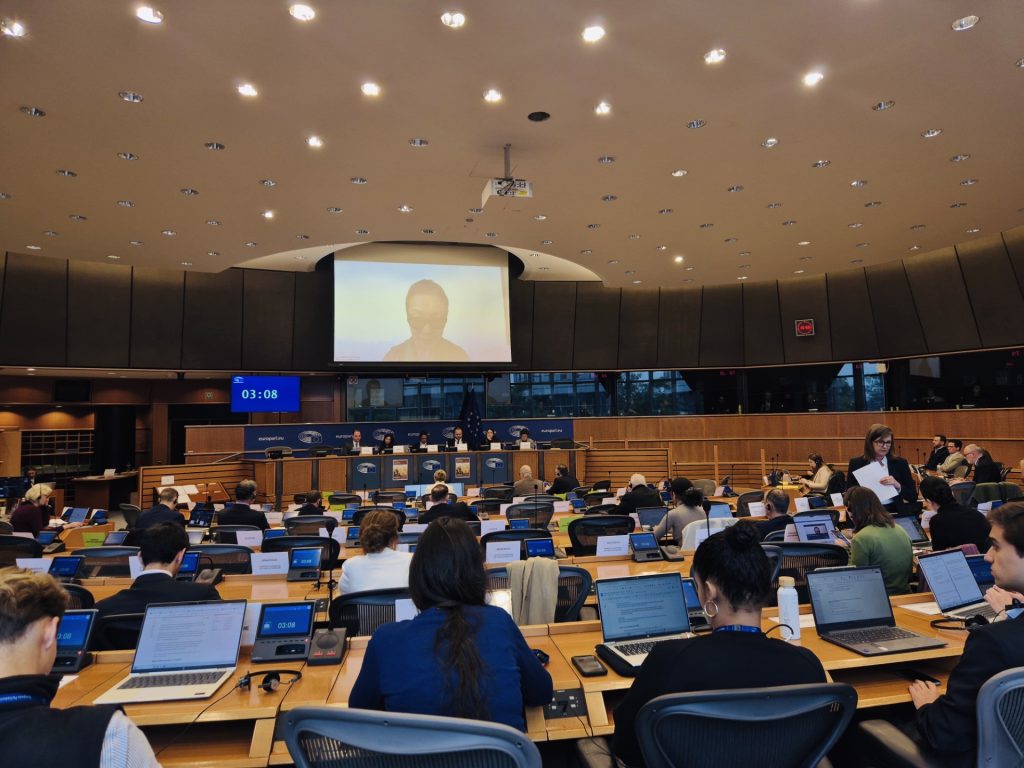
Brussels, 07 May: Merely a week following the European Parliament’s landmark resolution condemning China’s “Ethnic Unity Law” adopted with an overwhelming majority of 439 votes, the Subcommittee on Human Rights (DROI) and the Delegation for Relations with the People’s Republic of China (D-CN) convened a joint public hearing to examine the law’s impact on Tibetans, Uyghurs and other targeted groups.
The hearing builds on the momentum of the meeting of the Inter-Parliamentary Group for Tibet in the European Parliament held on 17 March, a few days after the PRC adopted the new law.
Chaired by DROI Chair MEP M. Satouri, the session featured a panel consisting of D-CN Chair MEP Eroglu, representatives from the European External Action Service (EEAS) and leading international human rights organisations, as well as expert testimony from academic Charles Brown, a researcher at King’s College London, who provided a scholarly analysis of the legal framework.
MEP E. Eroglu opened the discussion by stating that the “Ethnic Unity Law” places unprecedented pressure on Tibetans and Uyghurs, signalling a dangerous escalation in state-mandated assimilation.
Sarah Brooks, China Director of Amnesty International, cited the organisation’s 2025 annual report to highlight the shrinking space for civil society in China. She warned that the new law would formalise the state’s total control over the cultural and social lives of ethnic minorities.
Tenchoe Gyatso, President of the International Campaign for Tibet (ICT), participating online from Washington DC, urged EU member states to issue a unified public statement against the law. She also called for the EU to raise Tibet at the highest-level of EU-China relations, appoint an EU Special Representative for Tibetan Affairs mirroring the US and press Beijing to resume the long-stalled Sino-Tibetan negotiations, describing it as the only peaceful way of resolving the Sino-Tibet conflict.
Charles Brown, a researcher from King’s College London, who also participated online to provide an expert analysis of the “Ethnic Unity Law.” Brown’s academic perspective highlighted how the legislation formalises state control over the cultural and social lives of different groups, aligning with warnings that the law creates a legal framework for intensified and institutionalised assimilation
Representing the EEAS, Nicole Pusterla confirmed that the EU is closely monitoring the law’s implementation. Echoing recent remarks by Commissioner Hadja Lahbib in her post-debate intervention, Pusterla expressed a specific alarm over the law’s potential extraterritorial reach and urged member states to refuse any cooperation that might facilitate its application. She reaffirmed the EU’s commitment to protecting fundamental human rights, including cultural, linguistic, and religious freedoms as enshrined in EU treaties and charters.
During the discussion session, MEP R. Juknevičienė drew parallels between the law and the forced assimilation policies experienced by Lithuania during the Soviet era, stating that she can relate to the dangers such measures pose to minority identities and freedoms.
ECR representative MEP M. Kaminski said the new law demonstrates the authoritarian nature of the Chinese regime, which calls for a proportional response.
Ultimately, the hearing underscores the urgency and the far-reaching consequences of this legislation, which codifies forced assimilation of Tibetans and other groups in utter disregard of China’s own national laws, as well as its obligations under international law, signalling a critical need for a unified European response.
Welcoming this new scrutiny, Rigzin Genkhang, the Representative of His Holiness the Dalai Lama at the Office of Tibet Brussels, expressed deep gratitude to both the Subcommittee on Human Rights and the Delegations for Relations with the PRC for convening the hearing.
She emphasised that this continued parliamentary oversight is vital to ensure that the landmark EP resolution condemning China’s “Ethnic Unity Law” translates into sustained diplomatic pressure.
The full proceeding is available here.